




Performance Radiator Comparison Guide: OEM vs. Aluminum Upgrades for 2026
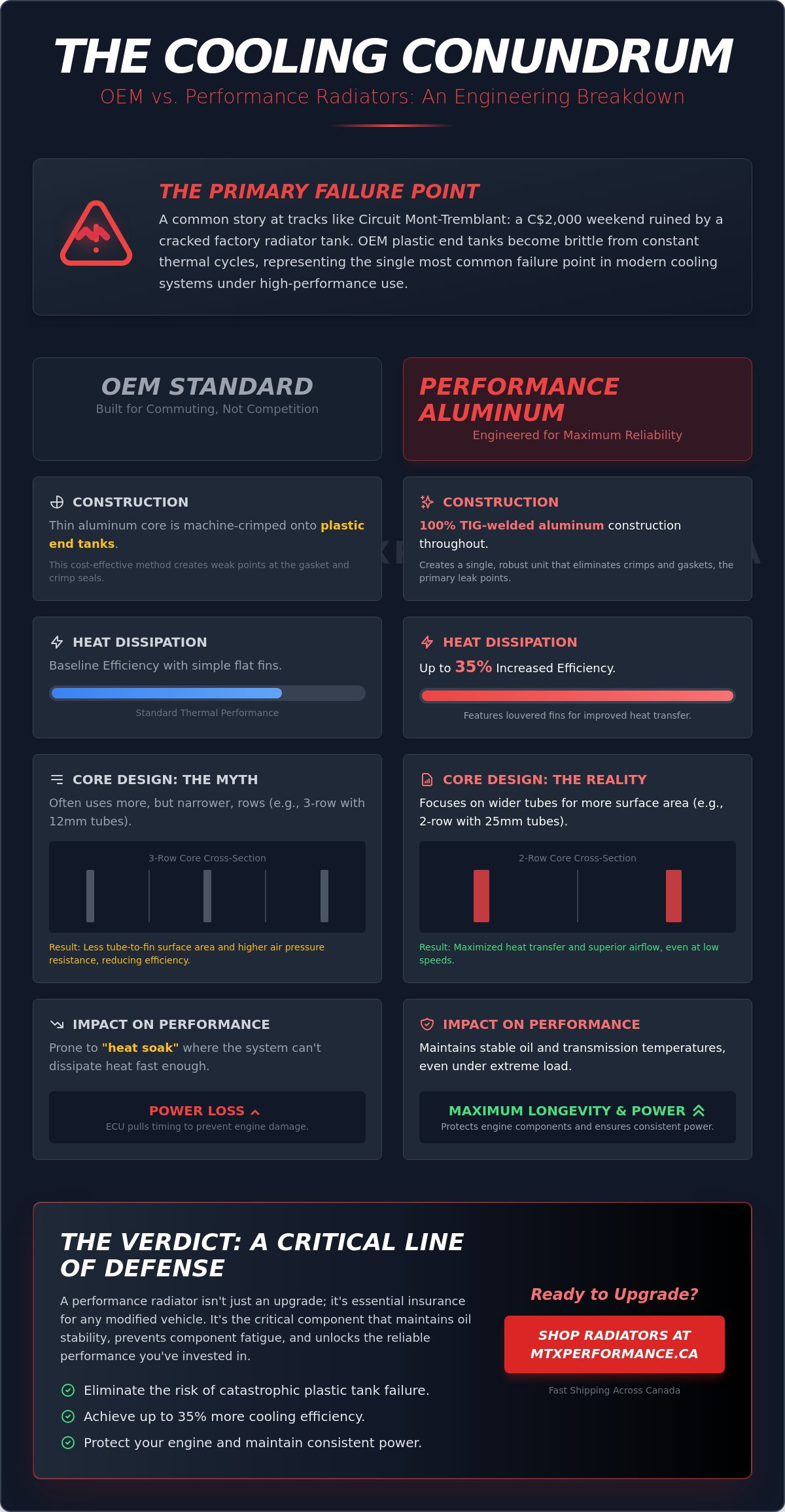
Last July, a Porsche 911 owner at Circuit Mont-Tremblant saw his track day end abruptly when his factory radiator tank cracked under high pressure. It's a common failure point that can turn a C$2,000 weekend into an expensive towing bill. You likely understand that while OEM cooling systems work for a standard commute, they aren't built to handle the extreme thermal loads of a tuned engine or spirited driving in the Canadian summer. This guide explores the technical evolution of cooling technology for 2026. We'll show you exactly how a performance aluminum radiator eliminates the risk of plastic fatigue while improving heat dissipation by up to 35 percent. You'll learn why core thickness isn't the only metric that matters and how to choose a setup that protects your high-power investment. We're breaking down the structural differences between standard units and professional grade upgrades to help you achieve maximum engine longevity and cooling reliability.
Key Takeaways
- Master the engineering differences between TIG-welded aluminum and factory plastic to ensure your cooling system can handle increased horsepower.
- Identify why standard plastic end tanks are the primary failure point during intense thermal cycles and how to eliminate this risk.
- Learn to calculate the ideal core thickness and surface area for your specific build, whether it is a daily driver or a dedicated track machine.
- Discover how a performance radiator acts as the critical line of defense for maintaining oil stability and preventing engine component fatigue.
- Find out how to source premium cooling upgrades with fast shipping across Canada to get your high-power project back on the road faster.
The Critical Role of the Radiator in High-Performance Automotive Cooling
Every high-output engine relies on a high-pressure, closed-loop system to survive the rigors of spirited driving. The Critical Role of the Radiator involves acting as the primary heat exchanger, transferring intense thermal energy from the coolant to the ambient air. Heat is the ultimate enemy of mechanical longevity. When internal temperatures spike, oil viscosity drops rapidly. This breakdown leads to premature wear on rod bearings and piston rings, eventually risking catastrophic engine failure.
Increasing horsepower isn't just about adding fuel and air; it's a direct trade-off with thermal waste. Approximately 70% of the energy produced by combustion doesn't reach the wheels. Instead, it transforms into heat that your cooling system must evacuate immediately. If your radiator can't keep up with this thermal load, you'll encounter "heat soak." This phenomenon occurs when the cooling components become saturated with heat, forcing the ECU to pull ignition timing and slash power to protect the block. You won't just lose the race; you'll lose the driving experience you've invested in.
How Radiators Dissipate Heat
Radiators operate through three core principles: conduction, convection, and radiation. Thermal energy moves via conduction from the hot coolant through the aluminum or copper tube walls into the cooling fins. Convection then takes over as high-velocity airflow passes through these fins to carry the heat away into the atmosphere. Radiator placement and ducting are vital. Even a premium core will fail if it's blocked by a massive intercooler or hidden behind a bumper with poor airflow characteristics. Thermal equilibrium in a performance engine is the precise state where the cooling system's heat rejection rate perfectly matches the engine's heat production during peak load.
The Impact of Engine Mods on Cooling
Modifying your car often creates a domino effect on thermal management. Installing cold air intakes or high-flow exhausts shifts the air-fuel dynamic, resulting in higher cylinder pressures and intensified heat output. Stock units are engineered for standard commuting, not the sustained 20-minute sessions at Canadian tracks like Mosport or Circuit Mont-Tremblant. Increased boost levels can raise combustion temperatures by over 150°C, quickly overwhelming thin OEM cores. You need balanced cooling for drivetrain longevity. A high-performance radiator ensures that your oil and transmission temperatures remain stable, protecting your precision-engineered components from the stresses of extreme power.
Performance Aluminum vs. OEM Radiators: The Engineering Breakdown
Original Equipment Manufacturer (OEM) units typically utilize a thin aluminum core crimped to plastic end tanks. While cost-effective for mass production, these plastic components become brittle after 5 or 6 years of thermal cycling at 105°C. A performance aluminum radiator replaces this compromise with 100% TIG-welded construction, eliminating the gaskets and crimps that represent the most common leak points in modern cooling systems. This Engineering Breakdown confirms that material integrity directly dictates how much pressure a system can safely sustain under load.
Design beats raw size every time. Many enthusiasts believe a "3-row" or "4-row" core is inherently superior, but this is a common misconception. A 2-row core featuring wide 25mm tubes offers more surface area for tube-to-fin contact than a 3-row core with narrow 12mm tubes. Thicker cores also create significant static pressure resistance. If a core is too deep, air velocity drops by as much as 40% before it reaches the back of the stack, rendering the extra rows useless at low speeds.
Thermal Conductivity and Efficiency
Aluminum alloys used in performance cooling provide a thermal conductivity of approximately 235 W/m·K. While copper has a higher base conductivity, the lead-based solder used to assemble copper radiators acts as an insulator, often reducing total heat rejection by 15% to 20%. Performance units utilize louvered fins, which are tiny angled cuts in the metal that force air to tumble. This turbulence breaks the laminar boundary layer, ensuring that air "scrubs" the heat away from the tubes more effectively than flat OEM fins.
Weight and Durability Comparison
Weight management is critical for vehicles like the BMW M3 or Audi RS series. Switching to an all-aluminum unit can save between 3 and 6 kilograms compared to a copper-brass equivalent. This weight is removed from the very front of the chassis, directly improving turn-in precision. In harsh Canadian winters, the salt and brine used on roads in Ontario and Quebec accelerate galvanic corrosion in radiators that mix different metals. A unified aluminum structure resists this degradation more effectively over a 10-year lifespan.
Performance upgrades also allow the use of high-pressure caps, often rated at 1.3 bar (19 psi) or higher. This raises the boiling point of your coolant, providing a safety margin during aggressive summer driving or track sessions. If you are pushing your vehicle's limits, you can consult with our technicians to find the exact core specifications required for your specific build and power goals.
Evaluating Construction Quality: Plastic End Tanks vs. TIG-Welded Aluminum
OEM manufacturers prioritize cost-efficiency by using plastic end tanks crimped onto aluminum cores with rubber gaskets. This design represents the primary failure point in any factory cooling system. After 120,000 kilometers or several harsh Canadian winters, the plastic becomes brittle. Thermal expansion cycles cause the aluminum core and plastic tanks to expand at different rates. This constant movement eventually compromises the rubber seal, leading to slow leaks or catastrophic bursts. When you push a vehicle on the track or in high-traffic heat, these weak points are the first to surrender.
Upgrading to a high-performance radiator replaces these vulnerable components with a 100% aluminum construction. This eliminates the "crimped" seam entirely. Beyond durability, polished aluminum offers a "show car" aesthetic that plastic simply cannot match. It transforms a functional engine bay into a display of precision engineering, reflecting the high standards of a professional build.
Common Radiator Failure Modes
Plastic tanks usually fail through hairline cracks that develop near the inlet and outlet necks. These cracks are often invisible until the system reaches operating temperature and pressure. Under high-temperature track conditions, where coolant pressures can exceed 1.4 bar (20 psi), the seam between the tank and the core often separates. This leads to an immediate loss of pressure and coolant. A performance radiator prevents these issues by utilizing a uniform material throughout the entire unit. By removing the rubber gasket, you eliminate the component most likely to perish under extreme thermal stress. This protection saves drivers from the C$1,500+ repair bills associated with warped cylinder heads or blown head gaskets caused by sudden overheating.
The Precision of TIG-Welding
TIG (Tungsten Inert Gas) welding is the gold standard for performance cooling. Unlike the robotic MIG welding found in mass-produced parts, manual TIG-welding allows for 100% bead penetration and a cleaner, stronger bond. This process creates a fused joint that is structurally superior to the base aluminum itself. Brands like Mishimoto utilize this technique to ensure their units can withstand the vibrations and chassis flex common in competitive drifting or circuit racing.
- Structural Rigidity: An all-aluminum chassis resists twisting, protecting the internal cooling fins from stress-induced leaks.
- Leak-Proof Security: Hand-welded seams are pressure-tested to ensure they won't fail under 30+ psi of cooling system pressure.
- Heat Dissipation: Aluminum end tanks act as additional heat sinks, whereas plastic tanks act as insulators, trapping heat inside the coolant.
Choosing a TIG-welded unit isn't just an upgrade; it's an insurance policy for your engine's longevity. It's the difference between a car that finishes the race and one that ends up on a flatbed.
How to Choose the Right Radiator for Your Specific Build
Selecting the correct radiator depends entirely on your vehicle's thermal load and intended environment. A daily driver in Toronto faces different challenges than a track-focused GT-R at Mont-Tremblant. For every 100 horsepower added over stock, your cooling system faces roughly 30% more thermal stress. High-power builds require a multi-core aluminum unit with increased fin density to prevent heat soak during aggressive pulls. You must match core thickness to your specific engine displacement. A 50mm core might be overkill for a naturally aspirated four-cylinder but it's the bare minimum for a high-output V8.
Airflow management is equally vital. Don't pair a premium core with weak factory fans. Use high-CFM electric fans and a precision-sealed shroud. This setup ensures air passes directly through the cooling fins rather than escaping through gaps in the engine bay. A high-efficiency radiator is only as good as the volume of air moving across its surface at low speeds or during stationary idling.
Boosted vs. Naturally Aspirated Needs
Forced induction changes the cooling math entirely. Turbochargers inject massive heat into the engine oil and coolant. You need to monitor these fluctuations in real-time to avoid catastrophic failure. Integrating cooling with a Cobb Tuning V3 Accessport allows you to track coolant temperatures with digital precision. When you're managing heat while running a HKS Super SQV4 Blow Off Valve and high-boost setups, the cooling system must compensate for the increased ambient temperature in the engine bay. Turbocharged engines often require a 40% increase in radiator surface area compared to their naturally aspirated counterparts to maintain optimal operating windows.
Installation and Fitment Considerations
Precision fitment is a non-negotiable requirement for 2026 builds. Choose a direct-fit unit to avoid the fabrication headache associated with universal kits. Modern engine bays are incredibly cramped; you must ensure adequate clearance for intercooler piping and intake tracts. Don't overlook the secondary components. Use high-quality silicone hoses and stainless steel T-bolt clamps. These components withstand the higher pressures of a performance cooling system without leaking or bursting under heavy load. A single weak clamp can ruin a C$2,000 track day in seconds.
Ready to optimize your cooling system for maximum reliability? Consult the experts at MTX Performance for a custom thermal solution tailored to your build.
Upgrade Your Cooling System with MTX Performance Solutions
Selecting a high-performance radiator is a critical decision for any serious build. It's the difference between a car that pulls timing due to heat soak and one that delivers consistent laps at the track. At MTX Performance, we focus on high-end thermal management solutions designed for drivers who demand more from their machines. We've vetted the market to bring you components that balance aesthetic mechanical beauty with raw engineering power. We don't just supply parts; we provide the thermal insurance your engine needs to survive at the limit.
Why We Recommend Mishimoto
Mishimoto remains our top-tier recommendation for enthusiasts seeking reliability and performance. Their aluminum radiators replace restrictive, failure-prone plastic end tanks with robust, TIG-welded aluminum. This design isn't just about durability; it's about thermal capacity. Real-world performance testing shows temperature drops of up to 25 degrees compared to factory units. Every unit is engineered for a precision OEM-style fit, meaning you won't need to cut or grind your engine bay to get it installed. Best of all, their lifetime warranty includes accident protection, giving you total peace of mind on the street or the circuit.
The technical advantages of a Mishimoto radiator include:
- Dual or triple-core designs for maximum surface area and heat dissipation.
- Magnetic drain plugs to capture metallic debris in the cooling system.
- High-pressure radiator caps to raise the boiling point of your coolant.
- Full aluminum construction that resists the cracking common in aged plastic tanks.
Ordering from MTX Performance
Shopping for performance parts in Canada shouldn't involve a math degree to calculate exchange rates. When you buy from MTX Performance, you're dealing with a local expert. You'll avoid the C$100 or more in surprise import duties and brokerage fees that typically plague cross-border shipments. We maintain a massive inventory in our Canadian warehouse, allowing us to offer fast nationwide shipping that typically arrives at your door in 2 to 5 business days. We specialize in the elite brands you drive, including BMW, Audi, VW, and the most popular Japanese imports.
Our staff doesn't just sell parts; we understand the mechanics of power. Whether you're building a 600-horsepower street beast or a dedicated track car, we provide the expert technical support needed to choose the right cooling configuration. We'll help you verify fitment and suggest the necessary accessories to ensure a seamless installation. Ready to optimize your build? Shop High-Performance Radiators at MTX Performance and get the cooling your engine deserves.
Maximize Your Thermal Efficiency for the 2026 Season
Don't let a factory-grade cooling system bottleneck your build's potential. Upgrading from a standard plastic-tank unit to a TIG-welded aluminum radiator provides a 30% increase in cooling efficiency. This jump is essential for maintaining peak horsepower during high-stress driving cycles. The 2026 performance landscape demands components that withstand extreme thermal loads without the failure points common in OEM designs. At MTX Performance, we specialize in high-end European and domestic builds, ensuring every part meets the rigorous standards of the Canadian climate and your specific power goals.
As an Authorized Mishimoto Dealer, we provide access to race-proven hardware backed by expert technical advice from seasoned builders. We offer fast nationwide Canadian shipping to get your project back on the road or track without delay. Precision cooling isn't just an upgrade; it's an insurance policy for your engine's longevity and performance. Your vehicle deserves the reliability that only professional-grade engineering can provide.
Upgrade your cooling system today with MTX Performance
Performance Cooling Frequently Asked Questions
Do I really need an aluminum radiator for my daily driver?
You don't strictly need an aluminum radiator if your vehicle remains stock and serves only for commuting. However, OEM plastic-tank units frequently fail after 100,000 kilometers due to the extreme temperature cycles of the Canadian climate. Upgrading to an all-aluminum unit provides a 25% increase in durability and eliminates the risk of the plastic end tanks cracking under pressure.
Will a performance radiator make my car warm up slower in the winter?
A performance radiator won't slow down your winter warm-up times because the thermostat remains the primary gatekeeper of engine heat. The thermostat stays closed until the coolant reaches a specific temperature, usually between 82°C and 91°C, regardless of the radiator's size. Once the engine reaches its operating temperature, the larger core simply manages the heat more efficiently during high-load situations.
What is the difference between a 2-row and a 3-row radiator?
The primary difference lies in the surface area and the volume of coolant the radiator can hold. A 3-row unit typically offers 30% more cooling capacity than a standard 2-row model by increasing the contact points between the tubes and the fins. This extra volume is essential for high-horsepower builds that generate excessive thermal energy during aggressive driving or track sessions.
How much horsepower can a stock radiator handle before it fails?
Most factory cooling systems reach their thermal limit once you increase engine output by more than 20% to 25% over the stock rating. If your BMW or Audi originally produced 300 hp and you've tuned it to 400 hp, the stock unit won't dissipate the extra 80,000 BTUs of heat generated per hour. Upgrading ensures your engine doesn't pull ignition timing due to heat soak.
Can I install a performance radiator myself or do I need a shop?
Experienced DIYers can typically complete a radiator swap in 3 to 5 hours using basic hand tools. The process is straightforward, but precision is required when bleeding the system to remove trapped air pockets. Professional installation is recommended for modern European vehicles, as they often require specialized vacuum filling tools to ensure 100% coolant saturation in the cooling jackets.
What coolant should I use with an all-aluminum performance radiator?
You must use a high-quality Organic Acid Technology (OAT) or Hybrid OAT coolant that meets your manufacturer's specific requirements. For aluminum cores, it's vital to use distilled water in a 50/50 mix to prevent electrolysis and mineral buildup. Using the wrong coolant can lead to internal corrosion that reduces heat transfer efficiency by as much as 15% within the first year.
How often should I flush a performance cooling system?
Flush your performance cooling system every 24 months or 40,000 kilometers to maintain peak thermal conductivity. High-performance engines subject the coolant to higher shear forces and temperatures, which can break down protective additives faster than in a standard vehicle. Regular maintenance prevents the accumulation of debris that could clog the high-density fins of your performance radiator.