




Whiteline Sway Bar Kit: The Ultimate Buyer’s Guide for Canadian Enthusiasts
The most expensive coilover setup on the market is practically useless if your car still leans like a cargo ship during high speed cornering. You know the feeling of a vague steering rack and that unsettling weight transfer that kills your confidence on the track or the backroads. It's a common frustration for enthusiasts who want precision but don't want to sacrifice the daily driveability of their performance vehicle.
Integrating a whiteline sway bar kit is the definitive solution to neutralize body roll and sharpen turn in response. This guide explores the technical engineering of Whiteline products, helping you decide between adjustable and fixed settings based on your specific chassis goals. We’ll also solve the biggest headache for Canadian tuners by identifying how to source these kits locally. You can skip the C$150 shipping delays and hidden brokerage fees that typically plague orders from US warehouses. We're diving into diameter selection, bushing maintenance, and the exact steps to achieve a flat cornering profile while keeping your tires firmly planted on the pavement.
Key Takeaways
- Learn how a whiteline sway bar kit utilizes high-tensile spring steel to eliminate body roll and sharpen cornering precision.
- Understand the engineering behind specialized powder coating that protects your suspension components from corrosive Canadian winter road salt.
- Master the selection process by determining the ideal bar diameter and adjustability settings for your specific performance goals.
- Discover the critical "under load" installation technique required to maintain perfect suspension geometry and long-term durability.
- Save time and money by sourcing your performance parts within Canada to avoid expensive brokerage fees and cross-border shipping delays.
Maximizing Cornering Performance with a Whiteline Sway Bar Kit
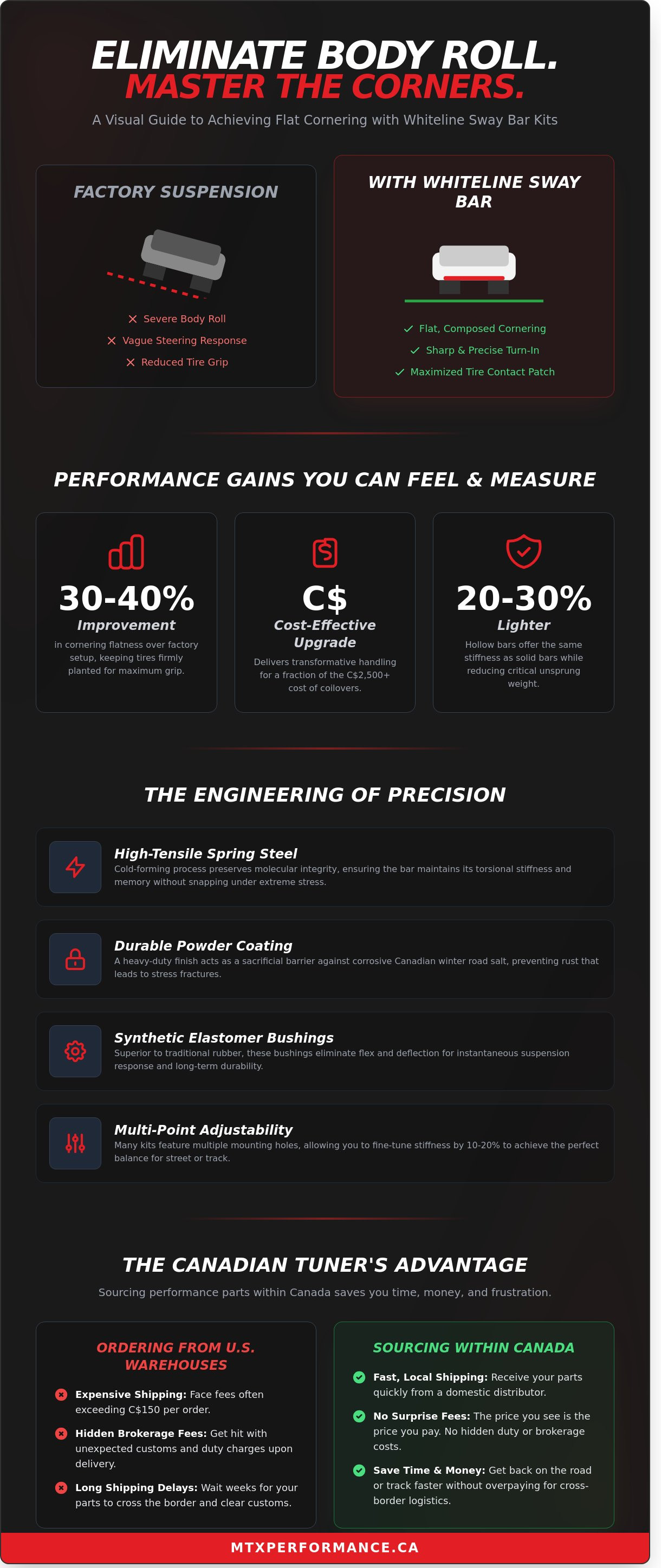
Precision handling starts where the rubber meets the asphalt. A whiteline sway bar kit serves as the backbone of a refined suspension setup for Canadian enthusiasts seeking to eliminate the vague feeling of factory tuning. This component, technically known as an Anti-roll bar, acts as a critical stabilizer by linking the left and right suspension arms. Its primary role is to reduce the lean of the vehicle body during cornering, ensuring the chassis remains composed under stress.
Whiteline kits specifically target body roll by increasing the torsional stiffness of the suspension system. When you dive into a sharp turn at a track like Canadian Tire Motorsport Park, the sway bar resists the twisting force, keeping the car level. This mechanical resistance is vital for maintaining the tire contact patch. By keeping the tires flatter against the road, you maximize the available friction. Most drivers find that a sway bar upgrade is the most cost-effective modification available. While a high-quality set of coilovers can easily exceed C$2,500, a Whiteline kit delivers a transformative 30% to 40% improvement in cornering flatness for a fraction of that investment.
The Mechanics of Body Roll and Lateral G-Force
High-speed cornering generates significant lateral G-force, which naturally wants to push the vehicle's weight toward the outside tires. This weight transfer causes the body to roll, which negatively impacts the suspension geometry. As the car leans, the tires lose their optimal camber angle, effectively lifting part of the tread off the pavement. This reduction in grip leads to slower exit speeds and less driver confidence. The goal of "flat cornering" isn't just about aesthetics; it's about keeping the suspension in its most effective operating window. For street applications in GTA traffic or track sessions in Quebec, a flatter car reacts faster to steering inputs and maintains a more consistent grip level across all four corners.
Whiteline vs. Factory Suspension: What Changes?
Standard factory sway bars are often designed with a bias toward comfort and predictable understeer, which can feel sluggish to a performance-oriented driver. Whiteline engineers their kits using high-grade spring steel to provide superior feedback. They often offer a choice between solid and hollow construction. Hollow bars are engineered to provide the same stiffness as a solid bar while reducing unsprung weight by roughly 20% to 30%, improving overall suspension response. Torsional rigidity is the resistance to twisting under lateral load. By increasing this rigidity, Whiteline kits effectively neutralize factory understeer, allowing for a more "neutral" balance. This means the car rotates more effectively, letting you carry more speed through the apex without fighting the steering wheel.
- Reduced Body Roll: Keeps the vehicle level during 0.8G+ lateral maneuvers.
- Improved Contact Patch: Ensures maximum tire-to-road surface area.
- Sharper Turn-in: Eliminates the delay between steering input and chassis reaction.
- Adjustability: Many Whiteline bars feature multiple bolt holes to fine-tune stiffness by 10% to 20%.
The Engineering Secret: Synthetic Elastomer and Spring Steel
Precision handling starts with the quality of the raw materials. Every whiteline sway bar kit begins its life as high-tensile, cold-formed spring steel. Unlike cheaper alternatives that use hot-forming processes, Whiteline's cold-forming technique preserves the molecular integrity of the steel. This ensures the bar maintains its torsional stiffness over years of hard cornering without losing its "memory" or snapping under extreme stress. To understand how these components transform your vehicle's dynamics, it is helpful to review What Does a Sway Bar Do? and how it manages weight transfer.
For Canadian drivers, durability is a non-negotiable requirement. Road salt and brine used in Ontario and Quebec winters can decimate unprotected suspension components in just two seasons. Whiteline addresses this with a heavy-duty powder coating that acts as a sacrificial barrier against corrosion. This finish isn't just for aesthetics; it prevents rust pits that can lead to stress fractures in the steel. Additionally, Whiteline includes alloy lateral locks in their kits. These small but vital components prevent the bar from shifting sideways during aggressive maneuvers, ensuring the geometry stays centered even when you're pushing the limits on a track day.
Synthetic Elastomer Bushing Technology
Traditional rubber bushings are the weak link in most factory suspension setups. They're designed for comfort, which means they're prone to "deflection" or squishing under load. When rubber deforms, your steering feels vague and unresponsive. Whiteline replaces this outdated material with a proprietary synthetic elastomer. This material offers the longevity of solid plastic with the vibration-dampening qualities of rubber. It doesn't perish from oil or road grime, providing a consistent response regardless of the temperature.
Noise is often a concern with performance bushings, but Whiteline's "Greaseless" technology solves this. The bushings feature internal knurling, a diamond-patterned texture on the inner bore. This design traps grease more effectively than smooth surfaces, ensuring silent operation for thousands of kilometers. This means you get the razor-sharp turn-in you crave without the annoying squeaks typical of lesser polyurethane kits. If you're looking to upgrade your setup, you can browse our curated selection to find the right fit for your chassis.
Precision Manufacturing and Fitment
Whiteline doesn't believe in "universal" parts. Every whiteline sway bar kit is engineered for a specific vehicle application. This vehicle-specific approach ensures that the bar clears all factory subframes, exhaust hangars, and brake lines without interference. The bars are bent using CNC technology to guarantee a perfect fit every time, eliminating the need for "persuasion" during installation.
Building a high-performance machine requires a holistic approach to modifications. A stiffened chassis works best when the engine can breathe and react just as quickly. Many enthusiasts pair their suspension upgrades with PRL Motorsports high volume intakes to balance the increased cornering speed with improved throttle response. By integrating these precision-engineered components, you create a cohesive build where the hardware works in harmony rather than fighting against itself.
Selecting the Right Kit: Diameter and Adjustability
Choosing a whiteline sway bar kit requires more than just picking the thickest steel available. You've got to match the diameter to your vehicle's curb weight and intended use. A 22mm bar might transform a 1,200 kg hatchback, while a 1,800 kg BMW M4 often requires 27mm or larger to see a 25% reduction in body roll. Engineering the perfect setup involves understanding how sway bars work to resist centrifugal force during cornering. If the bar is too thin, the chassis remains lazy. If it's too thick, you lose the independent nature of your suspension, which hurts mechanical grip on rougher surfaces.
Whiteline offers both fixed and adjustable options. Fixed bars provide a set rate for dedicated builds, but most Canadian enthusiasts prefer the adjustable "Three-Hole" system. By moving the end link to the hole closest to the bar, you shorten the lever arm. This increases effective stiffness by approximately 15% to 20% without changing the physical part. You get soft, medium, and firm settings in one package. This versatility allows you to dial in your car for a Friday night track session at Cayuga and then soften it for the drive home.
Correcting Understeer and Oversteer
Handling balance depends on the "Roll Couple" distribution. If your front-wheel-drive Golf GTI plows wide in corners, a stiffer rear whiteline sway bar kit is the solution. It shifts the roll resistance to the rear, helping the car rotate. Conversely, rear-wheel-drive platforms prone to snap-oversteer benefit from increased front stiffness. This stabilizes the chassis and keeps the rear tires planted during high-speed transitions. Achieving neutral handling means the front and rear work in unison, allowing you to carry more speed through the apex without fighting the steering wheel.
Street Comfort vs. Track Rigidity
Bigger isn't always better for Canadian roads. Over-stiffening a car destined for the frost-heaved streets of Montreal or Toronto leads to "skipping." This happens when the bar is so rigid that it prevents independent wheel movement, causing a loss of traction on uneven surfaces. You must match your sway bar rates to your existing spring rates and dampening. For a technical breakdown of these ratios, consult our suspension torsion guide. We recommend starting with the medium setting and adjusting based on real-world feedback from your favorite backroad. A balanced car is always faster than a stiff one that can't keep its tires on the pavement.
Installation and Dialing In Your Whiteline Setup
Installing a whiteline sway bar kit requires more than just basic mechanical skills; it demands precision to ensure the hardware performs as engineered. You'll need a standard metric socket set, a quality torque wrench, and a set of drive-on ramps. Using ramps is often superior to jack stands because the suspension must remain under load during the final tightening. If you torque the mounting bolts while the wheels are hanging, you'll lock the bushings in a twisted state. This creates artificial spring rate and leads to premature bushing failure within the first 5,000 kilometers of use. Precision is the standard at MTX Performance. Always apply the included synthetic grease to the internal D-shaped bore of the bushings. This specialized lubricant prevents the annoying squeaks often associated with aftermarket polyurethane components.The Role of Adjustable End Links
Stock end links are designed for factory ride heights and soft, thin bars. Once you install a high-performance whiteline sway bar kit, these OEM links become a weak point. If your vehicle is lowered by even 20mm, the sway bar geometry shifts, often causing the bar to pull on one side more than the other. This "preload" creates unpredictable handling in sharp corners. Whiteline's heavy-duty adjustable end links allow you to reset the bar to a neutral, horizontal position. These links feature 10mm or 12mm ball joints that withstand the 30% to 50% increase in torsional stiffness provided by the new bar. They eliminate flex, ensuring every millimeter of body roll is instantly countered by the sway bar.Post-Installation Testing and Maintenance
Your work isn't finished once the car leaves the ramps. Technical excellence requires a validation phase. Find a flat, open area and perform a series of tight "Figure-8" maneuvers at low speed. Listen for clunks or popping sounds. These noises usually indicate a loose end link nut or a bar that's physically striking a subframe component due to improper centering. Canadian driving conditions are brutal on suspension hardware. Road salt and extreme temperature swings can degrade lubricants quickly. Follow this maintenance protocol:- Re-torque all mounting hardware to factory specifications after the first 500 kilometers.
- During seasonal tire changes, inspect the bushings for debris and add fresh grease if necessary.
- Check end link boots for tears to prevent grit from destroying the internal bearings.
Buying Whiteline in Canada: Avoiding Duty and Delays
Shopping across the border often feels like a bargain until the final invoice arrives. Canadian enthusiasts frequently face hidden brokerage fees that can add C$50 to C$150 to a single shipment. Beyond the monetary cost, customs delays can stall your project for weeks. By choosing a local supplier, you bypass the CBSA bottleneck. MTX Performance ships directly from Canadian warehouses. This means your whiteline sway bar kit arrives in 2 to 4 business days, without surprise bills at your door. We understand that project timelines are tight. We prioritize national shipping to ensure your car spends more time on the road and less time on jack stands.
MTX Performance maintains a rigorous commitment to stocking genuine Whiteline components. Our inventory reflects the needs of the Canadian market, focusing on durability and precision. We don't just move boxes; we provide expert technical support. Our team understands how Canadian winters and road salt affect suspension geometry and hardware longevity. When you buy from us, you get access to specialists who can troubleshoot installation nuances or help you select the right spring rate to match your new sway bars.
Navigating the Canadian Performance Parts Market
Identifying authentic products is vital as grey-market imports become more common. These unauthorized imports often lack the manufacturer's warranty coverage within Canada. Buying from an authorized Canadian dealer ensures your investment is protected by a local warranty and responsive customer service. For a strategic look at sourcing, refer to our guide on Car Parts Canada. This resource helps you identify the best procurement paths for 2026 and beyond, ensuring you get the highest return on your performance budget.
Complete Your Build with MTX Performance
Total vehicle optimization requires a holistic approach. While a whiteline sway bar kit transforms your cornering flat, engine health remains the foundation of performance. We recommend bundling suspension upgrades with vital engine protection. For instance, integrating Radium Engineering catch cans prevents oil vapor from coating your intake valves, a common issue on direct-injection European engines.
MTX Performance is the premier choice for owners of high-end European and Japanese platforms. We specialize in marques like BMW, Audi, and Porsche, where precision is the only acceptable standard. Our catalog is curated for those who refuse to compromise on quality or engineering integrity.
Ready to transform your vehicle's handling?
- Eliminate body roll with precision-engineered sway bars.
- Avoid hidden border fees and long wait times.
- Access expert Canadian technical support for every install.
Browse the full Whiteline catalog at MTX Performance today and experience the difference that professional-grade suspension components make on the track and the street.
Transform Your Vehicle’s Cornering Dynamics
Installing a whiteline sway bar kit represents a definitive shift from factory compromise to engineered precision. By utilizing high-tensile spring steel and synthetic elastomer bushings, these kits significantly reduce body roll and sharpen steering response. You've learned how to select the ideal diameter and use adjustable settings to fine-tune your car's balance for specific track conditions or spirited road use. Sourcing your components within Canada is the most efficient path to performance. It eliminates the 6.1% duty often charged on imported auto parts and removes the unpredictability of international logistics.
MTX Performance stands as your premier authorized Whiteline dealer. We provide expert technical advice from performance specialists who understand the nuances of high-end suspension tuning. Benefit from fast nationwide shipping across Canada and avoid the hidden costs of cross-border shopping. It's time to stop settling for body roll and start demanding absolute control on every apex.
Shop Genuine Whiteline Sway Bar Kits at MTX Performance
Frequently Asked Questions
Will a Whiteline sway bar kit make my ride harsh on bumpy roads?
A Whiteline sway bar kit won't make your ride harsh on bumpy roads because it only engages during cornering forces. Unlike stiffer springs that compress on every vertical impact, sway bars remain neutral when both wheels hit a bump at the same time. You'll maintain 100% of your factory ride comfort while reducing body roll by up to 25% during aggressive maneuvers.
Do I need to upgrade both front and rear sway bars at the same time?
You don't have to upgrade both simultaneously, but installing a complete Whiteline sway bar kit ensures a perfectly neutral handling balance. Upgrading only the rear on a front-wheel-drive car helps rotate the back end, while upgrading just the front can increase understeer. For 90% of performance builds in Canada, a matched pair provides the most predictable grip levels on the road.
How do I know if my sway bar bushings are worn out?
Listen for audible clunking or squeaking when driving over speed bumps or turning at low speeds. Inspect the polyurethane or rubber components directly; 5-year-old bushings often show visible cracking or mushrooming at the edges. If you notice a 15% increase in body roll compared to when the kit was new, your bushings likely need replacement to restore steering precision.
Is it necessary to get an alignment after installing a sway bar?
A wheel alignment isn't technically required after a sway bar install since the bar doesn't change your basic suspension geometry. However, many modern European vehicles require dropping the subframe by 2 or 3 inches to access the front bar mountings. If your technician moves the subframe during the process, a professional alignment is vital to prevent uneven tire wear and maintain straight-line stability.
Can I install a Whiteline sway bar kit on a vehicle with stock springs?
You can absolutely install a Whiteline sway bar kit on a vehicle with stock springs to improve handling without lowering the chassis. This setup is ideal for Canadian winters where maintaining factory ground clearance is essential for deep snow. It's one of the most effective ways to sharpen steering response by 30% while keeping the factory dampening characteristics for daily commuting.
What is the difference between a solid and a hollow Whiteline sway bar?
The primary difference is weight, as a hollow bar can be 40% lighter than a solid bar of the same torsional stiffness. A 24mm solid bar and a 26mm hollow bar might provide identical resistance to body roll. Whiteline engineers use solid steel for smaller diameters and hollow chromoly for larger applications to optimize the strength-to-weight ratio for both track and street use.
Do Whiteline sway bars require frequent lubrication?
Whiteline sway bars don't require frequent lubrication if you use the supplied synthetic grease during the initial installation. Their grease is specifically formulated to resist water washout, which is critical for surviving Canadian road salt conditions. You should only re-grease the bushings if you hear a dry creaking sound, which typically occurs every 2 or 3 years of heavy driving.
How much time does a typical sway bar installation take?
A typical rear sway bar installation takes about 1 hour, while front bars on complex German platforms can take 3 to 4 hours. Rear bars are often accessible with basic hand tools, but front installations frequently involve clearing the steering rack or subframe components. Professional performance shops in Canada usually quote between 2 and 5 hours of labor for a full vehicle kit installation.