




What is a Cat-Back Exhaust? The Ultimate Guide to Performance and Sound
Most enthusiasts believe a louder car is inherently faster, but true engineering proves that a superior sound is simply the byproduct of unlocked engine efficiency. You want that crisp, aggressive note for your BMW or Audi without the exhausting vibration of highway drone or the anxiety of a failed emissions test. It's a common frustration to invest in a catback exhaust only to face C$250 in hidden duty fees or discover that inferior T409 steel can't survive three seasons of Canadian road salt.
This guide demonstrates exactly how a premium system transforms your vehicle's power delivery and acoustics while remaining fully road-legal. We'll explore the technical precision behind T304 stainless steel, show you how to secure a documented 8% horsepower increase, and navigate the logistics of Canadian shipping to avoid surprise costs at your door. By the end, you'll know how to achieve the perfect balance of mechanical excellence and aesthetic impact with premium tips that define your car's character.
Key Takeaways
- Master the anatomy of a high-performance catback exhaust and how its components work together to streamline your vehicle's exhaust flow.
- Unlock the secrets of fluid dynamics to balance backpressure and scavenging for immediate gains in power and throttle response.
- Learn to distinguish between rich acoustic tone and irritating highway drone to ensure a premium auditory experience in every gear.
- Protect your investment against the harsh Canadian climate by choosing the right grade of stainless steel to resist road salt and corrosion.
- Gain expert insights on selecting elite brands like AWE and Borla that meet the MTX standard for engineering excellence and durability.
What is a Cat-Back Exhaust System?
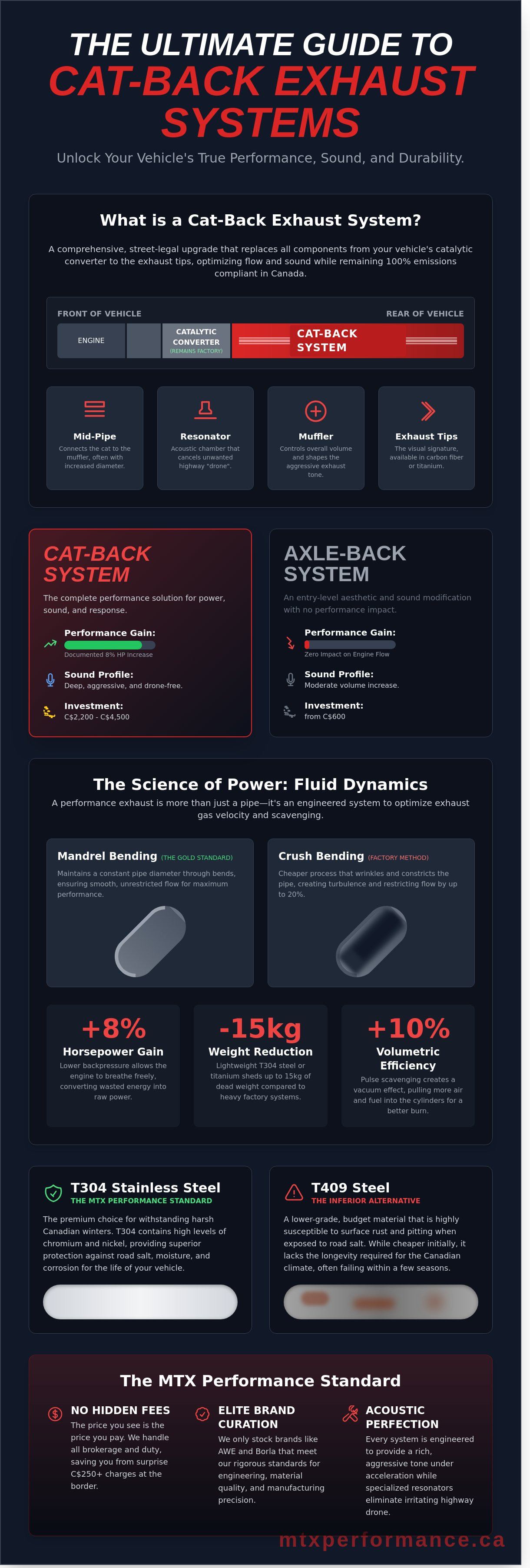
A catback exhaust is the definitive upgrade for drivers seeking a balance between raw power and street legality. This system replaces every component from the outlet of the factory catalytic converter to the rear exhaust tips. It's a comprehensive solution that sits in the middle to rear section of your vehicle's undercarriage. By maintaining the factory catalytic converters, your car stays emissions-compliant in Canada, making it the preferred choice for high-performance street builds in provinces like Quebec and Ontario.
The system typically consists of four primary segments:
- Mid-pipe: The bridge between the catalytic converter and the muffler.
- Resonator: A specialized chamber that eliminates specific "drone" frequencies.
- Muffler: The primary unit responsible for volume and tone control.
- Tailpipes and Tips: The final exit point that defines the vehicle's rear aesthetic.
Installation usually requires 90 to 120 minutes of shop time. It offers a direct bolt-on path to better performance without the legal risks associated with removing emissions hardware. You get a deeper, more resonant engine note while keeping the vehicle fully road-legal for daily use.
Cat-Back vs. Axle-Back: Knowing the Difference
Axle-back systems are entry-level modifications. They only replace the muffler and tips, offering a change in sound with zero impact on engine flow. A catback exhaust is a superior investment because it replaces the restrictive factory mid-pipe. Most performance systems increase the pipe diameter by 0.5 to 1.0 inch. While an axle-back might cost C$600, a premium cat-back for a platform like the BMW M3 or Audi RS5 ranges from C$2,200 to C$4,500. The extra cost delivers measurable gains in throttle response and exhaust gas velocity.
The Anatomy of a High-Performance Exhaust
Precision engineering defines the internal components. Resonators act as acoustic tuning forks, using destructive interference to cancel out harsh rasp at specific RPM ranges, typically between 2,000 and 3,000 RPM. High-end mufflers use straight-through designs rather than the baffled chambers found in OEM units. This allows exhaust gases to pass through with minimal resistance. Finally, the tips provide the visual signature. Options like 102mm carbon fiber or burnt titanium finishes offer a high-end look that matches the increased mechanical capability of the system.
Fluid Dynamics: How a Cat-Back Increases Performance
Performance isn't just about sound; it's about physics. A high-quality catback exhaust optimizes the path combustion gases take from the catalytic converter to the atmosphere. Most factory systems prioritize manufacturing costs over flow efficiency, leading to excessive backpressure. While some backpressure is a byproduct of exhaust design, reducing it allows the engine to breathe. When you lower the resistance in the path of exiting gases, the engine spends less energy on the exhaust stroke, effectively freeing up horsepower that was previously "lost" to mechanical friction and pumping losses.
Exhaust scavenging is the process of using pulse energy to evacuate combustion gases. This phenomenon creates a vacuum effect. As one high-pressure pulse exits the cylinder, it leaves a low-pressure area behind it that helps pull the next charge of fresh air and fuel into the combustion chamber. A precision-engineered system can improve volumetric efficiency by 5% to 10% compared to restrictive OEM setups. Pipe diameter plays a critical role here. Moving from a stock 2.25-inch pipe to a 3-inch system is ideal for turbocharged platforms like the Golf R or BMW M3, but going too large on a naturally aspirated street car can actually slow down exhaust gas velocity, killing low-end torque.
- Weight Reduction: Factory exhaust systems are often made of heavy, low-grade steel and can weigh over 25 kg. Upgrading to a T304 stainless steel or titanium system can shed 7 kg to 15 kg from your vehicle.
- Heat Management: High-performance alloys dissipate heat faster than cast iron or mild steel, reducing the "heat soak" that can sap power during spirited driving on the track or the Trans-Canada Highway.
- Durability: Performance systems resist the salt and corrosion typical of Canadian winters, ensuring the investment lasts the life of the vehicle.
Mandrel Bending vs. Crush Bending
Crush bending is the budget-friendly standard for mass-produced cars. This process wrinkles the pipe at every curve, which can restrict flow by as much as 20% in tight bends. Professional-grade builds utilize mandrel bending. This method uses a solid insert inside the pipe during the bending process to maintain a constant, smooth diameter throughout every corner. Mandrel-bent systems are the gold standard because they eliminate the turbulence caused by internal ridges, ensuring your catback exhaust flows at maximum capacity.
Improving Exhaust Velocity
Smoother internal surfaces and optimized transitions reduce turbulence. When gas flow is laminar rather than turbulent, it maintains its velocity. This speed is what creates the crisp throttle response drivers crave. Faster gas exit speeds mean the turbocharger can spool up more quickly, reducing lag. If you're looking for a setup that balances these technical requirements, consulting with a performance specialist ensures your hardware is perfectly matched to your engine's displacement and tuning stage.
Acoustic Engineering: Sound Without the Drone
Sound defines the soul of a performance machine. A high-quality catback exhaust does more than just increase decibels; it sculpts the acoustic profile of your engine to match its power. Volume is a simple measure of sound pressure. Tone, however, is the complex intersection of frequency and resonance that creates a premium driving experience. High-end engineering ensures your car sounds like a precision tool rather than a loud distraction.
Drone is the enemy of any daily driver. It's that low-frequency vibration, typically between 100 Hz and 200 Hz, that resonates through the cabin during highway cruising. This frequency ruins the psychological connection to the car and makes long trips across Ontario or Quebec exhausting. To combat this, manufacturers utilize two distinct technologies:
- Reflective Silencing: Uses internal chambers to bounce sound waves back on themselves, canceling specific frequencies through destructive interference.
- Absorptive Silencing: Employs high-density packing materials like stainless steel wool or ceramic fibers to soak up high-frequency harshness.
Resonance Control and Drone Cancellation
Top-tier brands like AWE utilize 180 Technology to target and eliminate unwanted frequencies. This design uses a precisely tuned resonance chamber that reflects sound waves 180 degrees out of phase; it effectively deletes drone while maintaining a rich, aggressive note. Physical construction is equally vital to the sound profile. We prioritize 16-gauge T304 stainless steel because its wall thickness prevents the "tinny" vibrations found in budget systems. Cheaper, thinner piping often creates a high-pitched "rasp" above 4,500 RPM, whereas premium catback exhaust setups provide a deep, muscular growl that remains composed at redline.
Valved Exhaust Systems: The Best of Both Worlds
Active valved systems offer total control over your vehicle's personality. These setups integrate directly with factory drive modes in modern European performance cars. In "Comfort" mode, the internal valves remain closed, routing gases through baffled chambers for a civilized 75-decibel cruise. Switching to "Sport" or "Track" mode opens the butterflies, providing a straight-through path for maximum flow and a raw, 95-decibel roar. For enthusiasts who want that aggressive profile at all times without the complexity of valves, the AWE Track Edition Exhaust is the premier choice for Canadian roads, offering a pure and unfiltered mechanical soundtrack.
Selecting an Exhaust for the Canadian Climate
Canadian winters aren't just cold; they're chemically aggressive. Municipalities across the country now use liquid brine solutions that stick to metal surfaces more effectively than traditional rock salt. This creates a high-corrosion environment that can turn a budget catback exhaust into a pile of rust within 24 to 36 months. Choosing the right alloy is a matter of engineering survival for your vehicle's undercarriage.
Material Science: T304 vs. T409 Stainless
You'll primarily choose between two grades of stainless steel for your build. T304 is the premium standard, containing approximately 18% chromium and 8% nickel. It won't rust, even after years of salt exposure, though it'll develop a gold or bronze tint from heat cycles. T409 stainless is a more affordable alternative. It has less chromium and will develop surface oxidation quickly. While it stays structurally sound longer than mild steel, the aesthetic degrades fast. For a year-round driver in Canada, T304 is the only choice that maintains a showroom finish. Avoid aluminized steel entirely. A single stone chip in the aluminum coating exposes the mild steel underneath, leading to rapid perforation and total failure.
Hardware matters as much as the piping. High-quality hangers and 304 stainless steel clamps are vital for long-term performance. Cheap zinc-plated hardware often seizes or snaps during the first winter, leading to annoying rattles or dangerous exhaust leaks. When installing a high-performance catback exhaust, we recommend heavy-duty AccuSeal style clamps to ensure the system stays airtight through extreme temperature fluctuations ranging from -30°C to 400°C.
Avoiding the "Cross-Border Trap"
Ordering from US-based retailers often leads to "sticker shock" once the package hits the border. A system priced at $1,000 USD quickly climbs after applying a 1.36 exchange rate, followed by 5% GST and applicable provincial taxes. The real sting comes from brokerage fees, which can add C$70 to C$150 to your total cost. Shipping within Canada eliminates these hidden expenses and simplifies the process if you need a return or warranty claim. You can find more details on sourcing parts in our Pillar Guide on Performance Exhausts.
The MTX Performance Standard: Quality You Can Hear
Choosing a catback exhaust involves more than just picking a part from a catalog. At MTX Performance, we curate a selection based on rigorous engineering standards. We've partnered with industry leaders like AWE, Borla, and Invidia because they deliver consistent results on the dyno and the street. Our team consists of fellow enthusiasts who understand that a BMW M3 requires a different acoustic profile than a Volkswagen Golf R. We provide technical advice that goes beyond the product description, ensuring your investment translates into real-world performance. Precision is our baseline.
Ordering performance parts in Canada often leads to cross-border headaches like unexpected C$60 customs fees or weeks of shipping delays. We solve this with fast nationwide shipping from our domestic inventory. You get your parts faster without the paperwork stress or hidden brokerage costs. We handle the logistics so you can focus on the install.
Top Picks for 2026
- AWE Track Edition: This system is designed for the driver who prioritizes raw, aggressive sound. By removing the mufflers found in the Touring Edition, it often sheds up to 15 lbs of weight while providing an unfiltered exhaust note.
- Borla S-Type: This is the gold standard for daily drivers. It utilizes patented straight-through technology to eliminate cabin drone while delivering a deep, muscular tone under acceleration. It is the "just right" volume for most enthusiasts.
- Reliable Replacements: If you aren't looking for a performance boost but need a dependable fix for a rusted pipe, consider Walker Exhaust Systems for high-quality OE-style replacements.
Ready to Transform Your Drive?
Before you finalize your catback exhaust purchase, run through this technical checklist to ensure a seamless installation. First, verify your vehicle's wheelbase and trim level; a 2-door and 4-door variant often require different mid-pipe lengths. Second, inspect your factory exhaust hangers. If your car has over 80,000 km, these rubber components might be stretched or cracked, and replacing them now prevents future rattles. Finally, ensure you have the necessary 14mm or 15mm deep sockets and a can of penetrating lubricant for those stubborn factory bolts.
Don't settle for a mediocre exhaust note or restrictive factory piping. Verify your fitment using our precision search tool and upgrade your vehicle's soul. Explore our full collection of performance exhaust systems at MTX Performance and experience the difference that expert curation makes.
Elevate Your Driving Experience Today
Upgrading to a performance catback exhaust is the most effective way to unlock your engine's true voice and power. By optimizing fluid dynamics, these precision systems reduce backpressure and can provide measurable gains in horsepower and torque. You've learned how acoustic engineering eliminates drone, ensuring a premium cabin experience even during long hauls. Whether you're navigating urban streets or open highways, choosing T304 stainless steel components ensures your investment survives 10 or more Canadian winters without corrosion. We're proud to be an authorized dealer for industry leaders like AWE, Borla, and Invidia, bringing world-class engineering to your doorstep. Our specialists offer expert technical support to help you dial in the perfect setup for your specific vehicle model.
Shop Performance Cat-Back Exhausts at MTX Performance
Take advantage of our fast nationwide Canadian shipping and transform your car into the high-performance machine it was meant to be. It's time to stop compromising and start driving with confidence.
Once you've perfected your car's sound, you might even be inspired to share it. For car enthusiasts who want to launch their own podcast or create high-quality audio content, professional services for Remote Podcast Recording and Production can help capture that perfect exhaust note and your expert commentary with studio-level clarity.
Frequently Asked Questions
Will a cat-back exhaust void my vehicle warranty?
A cat-back exhaust won't void your entire vehicle warranty under Canadian consumer protection laws. Dealerships can't legally cancel your coverage simply because you've installed aftermarket parts. They must prove the specific exhaust component caused a failure to deny a warranty claim on a related system. Your engine and transmission warranties remain secure as long as the installation is performed correctly.
How much horsepower does a cat-back exhaust actually add?
Installing a high-quality catback exhaust typically adds between 5 and 15 horsepower on most turbocharged European vehicles. Naturally aspirated engines generally see a 2% to 5% increase in total power output. You'll notice the most significant gains when you pair the system with a Stage 1 ECU tune. This combination optimizes the increased airflow provided by the larger diameter piping.
Is a cat-back exhaust street legal in Canada?
Cat-back systems are street legal across Canada because they don't modify or remove the factory catalytic converters. You'll pass provincial emissions testing in Ontario or British Columbia without issues. However, you must comply with local noise bylaws. Most performance systems we install for BMW or Audi owners stay within the 80 to 95 decibel range to ensure they remain compliant with municipal regulations.
Can I install a cat-back exhaust system myself?
You can install a cat-back system yourself if you have a hydraulic lift and a standard set of metric sockets. It's a bolt-on procedure that usually takes between 2 and 4 hours depending on your experience level. We recommend professional installation for Porsche or Mercedes-Benz models. This ensures perfect tip alignment and leak-free seals that prevent annoying cabin drones at highway speeds.
What is the difference between catted and catless systems?
The primary difference is that a cat-back system is always "catted" since it retains the factory emissions equipment. Catless setups involve replacing the downpipes or headers, which removes the catalytic converter entirely. Catless configurations are strictly for track use and will trigger a Check Engine Light. A cat-back provides the aggressive acoustic profile you want while keeping your vehicle fully road-legal.
Does a cat-back exhaust improve fuel economy?
A cat-back exhaust can improve fuel economy by 1% to 3% during steady highway cruising. Efficiency increases because the engine spends less energy pushing spent gases through restrictive factory mufflers. Most drivers don't see these savings in the real world. The enhanced exhaust note often encourages more aggressive throttle input, which naturally increases fuel consumption during spirited driving sessions.
How much does a professional cat-back installation cost in 2026?
A professional catback exhaust installation in 2026 costs between C$250 and C$600 at specialized Canadian performance shops. Labor rates in major hubs like Montreal or Toronto average around C$150 per hour. Expect to pay more for systems featuring active valves or complex vacuum lines. Budgeting for 3 hours of expert labor ensures your high-performance vehicle receives the precision fitment it deserves.